
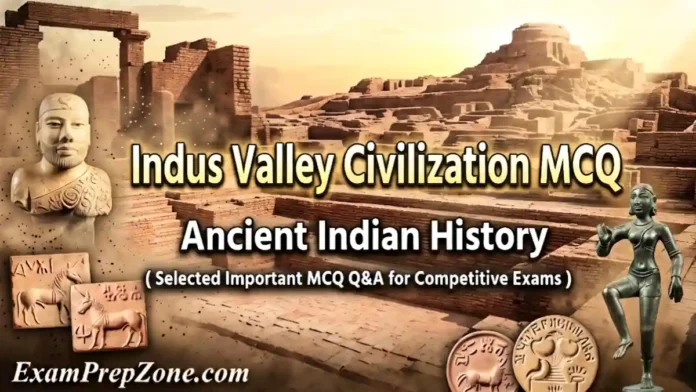
Indus Valley Civilization: Background and Important Brief Discussion
The Indus Valley Civilization or Harappan Civilization was the first urban civilization of ancient India, contemporary with the Copper and Bronze Age. In 1921, Dayaram Sahni discovered Harappa, and in 1922, Rakhal Das Banerji discovered Mohenjo-daro, unveiling the history of this ancient settlement. The main features of this civilization were planned cities built on a grid system, the use of burnt bricks, and an advanced underground drainage system. In today’s Indus Valley Civilization MCQ session, we have highlighted the important archaeological sites and the stories of their discovery. By solving these Indus Valley Civilization MCQ questions, you will be able to strengthen your foundation in the history of ancient India.
The economy of the Indus Valley Civilization was primarily agriculture-based, with wheat and barley being the main crops produced. On the commercial side, Lothal in Gujarat was an important maritime port of this civilization, used for trade with Mesopotamia. The people here did not know the use of iron, and in religious life, the worship of Pashupati Shiva and Mother Goddess was prevalent. The seals, weighing scales, and the massive granary of Harappa or the Great Bath of Mohenjo-daro provide evidence of their advanced lifestyle. Our Indus Valley Civilization MCQ study material is designed in such a way that through every question, you can prepare yourself comprehensively for competitive exams.
Rules to View the Correct Answer
Each question has four options. Click the “Show Answer” button below to see the correct answer.
(Note: Clicking for the 2nd time will Hide the answer, and clicking for the 3rd time will show it again.)
Indus Valley Civilization MCQ: 20 Important Questions and Answers for Competitive Exams
(A) Rakhal Das Banerji
(B) Dayaram Sahni
(C) John Marshall
(D) N.G. Majumdar
(A) Ravi
(B) Sutlej
(C) Indus
(D) Ghaggar
(A) Harappa
(B) Lothal
(C) Mohenjo-daro
(D) Kalibangan
(A) Lothal
(B) Dholavira
(C) Surkotada
(D) Banawali
(A) Copper
(B) Gold
(C) Iron
(D) Bronze
(A) Mound of the Dead
(B) Prosperous City
(C) Land of Peace
(D) Land of Pashupati
(A) Brahmi
(B) Kharosthi
(C) Pictographic
(D) Devanagari
(A) Horse
(B) Bull
(C) Elephant
(D) Lion
(A) Punjab
(B) Haryana
(C) Rajasthan
(D) Gujarat
(A) Stone
(B) Raw Bricks
(C) Burnt Bricks
(D) Wood
(A) Harappa
(B) Mohenjo-daro
(C) Lothal
(D) Kalibangan
(A) Airways
(B) Land routes
(C) Waterways
(D) None
(A) Indra
(B) Pashupati Shiva
(C) Vishnu
(D) Agni
(A) S.R. Rao
(B) Marshall and Mackay
(C) Wheeler
(D) Amalananda Ghosh
(A) Lothal
(B) Dholavira
(C) Amri
(D) Kot Diji
(A) Harappa
(B) Lothal
(C) Chanhudaro
(D) Ropar
(A) Multiples of 12
(B) Multiples of 16
(C) Multiples of 10
(D) Multiples of 20
(A) 1921
(B) 1922
(C) 1924
(D) 1925
(A) Mohenjo-daro
(B) Kalibangan
(C) Lothal
(D) Harappa
(A) Rice and pulses
(B) Corn and jowar
(C) Wheat and barley
(D) Millet and peas
People also ask (FAQs)
What was the Indus Valley Civilization?
The Indus Valley Civilization was the first urban Bronze Age civilization of ancient India, developed in the basins of the Indus River and its tributaries. It is famous for its advanced town planning and the use of burnt bricks.
What were the causes of the decline of the Indus Valley Civilization?
Although no single cause is known for the decline, historians suggest it occurred due to devastating floods, changes in the course of the Indus River, climate change, or the Aryan invasion.
Where is the Indus Valley Civilization located today?
The Indus Valley Civilization is currently located mainly in Pakistan and the north-western parts of India (Punjab, Rajasthan, Gujarat, and Haryana). Some parts were also spread across Afghanistan.
Which is the largest site of the Indus Valley Civilization?
‘Rakhigarhi’, located in the state of Haryana, is the largest currently discovered site of the Indus Valley Civilization. Mohenjo-daro and Harappa were also among the largest and most important cities.
What was the name of the main fort of the Indus?
The elevated area of each major city in the Indus Valley Civilization was called a ‘Citadel’. It was primarily the residence of the ruling class and the center for administrative activities.
Why was Mohenjo-daro destroyed?
The devastating floods of the Indus River are considered the primary cause of Mohenjo-daro’s destruction. Additionally, it is believed the city became deserted due to ecological imbalance and increased soil salinity.
📌 Smart Study Tips: Indus Valley Civilization
Indus Valley Civilization MCQ or similar history topics can be remembered more easily by following the tips below:
- Discoverer and Year: In 1921 Dayaram Sahni discovered Harappa and in 1922 Rakhal Das Banerji discovered Mohenjo-daro.
- River and Location: Remember that Mohenjo-daro is located on the banks of the Indus River and Harappa on the banks of the Ravi River.
- Use of Metals: Although people of the Indus Valley Civilization used copper and bronze, they did not know the use of iron.
- Famous Landmarks: The Great Bath of Mohenjo-daro, the Granary of Harappa, and the Maritime Port of Lothal frequently appear in Indus Valley Civilization MCQ exams.
- Measurement System: They used multiples of 16 for weights, and their script was pictographic. Additionally, to get a deeper understanding of the archaeological research and geographical extent of this civilization, you can check the historical records.
🌟 Message of Success: Every small step takes you towards a bigger goal. By solving these Indus Valley Civilization MCQ questions today, you have taken another step forward in your preparation. Remember, consistent hard work is the key to success. To strengthen your preparation, keep practicing other important history MCQs and Mock Tests on our Exam Prep Zone website regularly.