
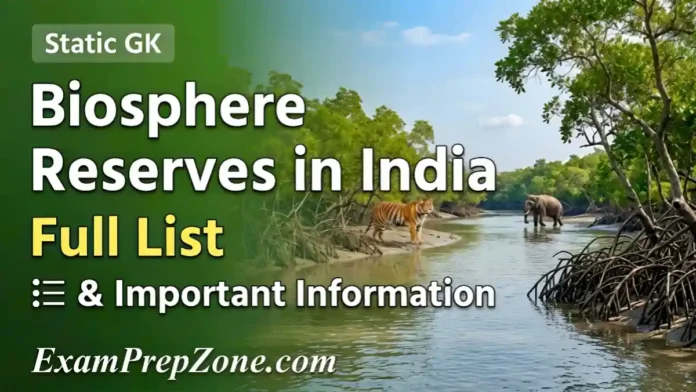
Biosphere Reserves and Wildlife Conservation in India: Background and Overview
The subject of “Biosphere Reserves and Wildlife Conservation in India” is extremely important for maintaining India’s ecological balance and protecting endangered wildlife. Planned wildlife conservation in India formally began with the passing of the Wildlife Protection Act, 1972.
Background and Brief Discussion:
- Conservation Goal: To protect the natural habitats of endangered flora and fauna and maintain the balance of the ecosystem.
- MAB Program: UNESCO launched the ‘Man and the Biosphere’ (MAB) program in 1971, which serves as the foundation for the establishment of Biosphere Reserves in India.
- Zonation: Each Biosphere Reserve is divided into three zones— Core Zone (strictly protected), Buffer Zone (research and education), and Transition Zone (coexistence of humans and nature).
- Objectives: Biodiversity conservation, sustainable development, and support for environmental research.
Special Highlights on Biosphere Reserves in India
The following are selected key facts about India’s Biosphere Reserves that are frequently asked in competitive exams:
- First Biosphere Reserve: Nilgiri Biosphere Reserve (Established: 1986). It is located at the junction of Tamil Nadu, Kerala, and Karnataka.
- Largest Biosphere Reserve: Rann of Kutch (Gujarat).
- Smallest Biosphere Reserve: Dibru-Saikhowa (Assam).
- UNESCO Recognition: Out of 18 Biosphere Reserves in India, 12 are included in the UNESCO ‘Man and the Biosphere’ (MAB) list.
- Latest Recognized Reserve: Panna Biosphere Reserve (Madhya Pradesh), added to the UNESCO list in 2020.
- Highest Biosphere Reserve: Khangchendzonga (Sikkim).
- Marine Biosphere Reserve: Gulf of Mannar (Tamil Nadu), famous for the Sea Cow or ‘Dugong’.
- Biosphere Reserve in West Bengal: Sundarbans (Established: 1989). It is renowned for the Royal Bengal Tiger and mangrove forests.
List of Biosphere Reserves in India 2026
Below is the list of 18 Biosphere Reserves in India, including their location and year of establishment, in table format:
| Name of Biosphere Reserve | Name of State | Year of Establishment |
|---|---|---|
| 1. Nilgiri Biosphere Reserve | Tamil Nadu, Kerala & Karnataka | 1986 |
| 2. Nanda Devi Biosphere Reserve | Uttarakhand | 1988 |
| 3. Nokrek Biosphere Reserve | Meghalaya | 1988 |
| 4. Great Nicobar Biosphere Reserve | Andaman and Nicobar Islands | 1989 |
| 5. Gulf of Mannar | Tamil Nadu | 1989 |
| 6. Manas Biosphere Reserve | Assam | 1989 |
| 7. Sundarbans Biosphere Reserve | West Bengal | 1989 |
| 8. Simlipal Biosphere Reserve | Odisha | 1994 |
| 9. Dibru-Saikhowa Biosphere Reserve | Assam | 1997 |
| 10. Dihang-Dibang Biosphere Reserve | Arunachal Pradesh | 1998 |
| 11. Pachmarhi Biosphere Reserve | Madhya Pradesh | 1999 |
| 12. Khangchendzonga Biosphere Reserve | Sikkim | 2000 |
| 13. Agasthyamala Biosphere Reserve | Kerala & Tamil Nadu | 2001 |
| 14. Achanakmar-Amarkantak Biosphere Reserve | Madhya Pradesh & Chhattisgarh | 2005 |
| 15. Rann of Kutch Biosphere Reserve | Gujarat | 2008 |
| 16. Cold Desert | Himachal Pradesh | 2009 |
| 17. Seshachalam Hills | Andhra Pradesh | 2010 |
| 18. Panna Biosphere Reserve | Madhya Pradesh | 2011 |
12 UNESCO-Recognized Biosphere Reserves in India (MAB List)
Out of the 18 Biosphere Reserves in India, the following 12 are part of UNESCO’s ‘Man and the Biosphere’ (MAB) program. The list is provided according to their year of recognition:
| Name of Biosphere Reserve | Year of UNESCO Recognition |
|---|---|
| 1. Nilgiri Biosphere Reserve | 2000 |
| 2. Gulf of Mannar | 2001 |
| 3. Sundarbans Biosphere Reserve | 2001 |
| 4. Nanda Devi Biosphere Reserve | 2004 |
| 5. Nokrek Biosphere Reserve | 2009 |
| 6. Pachmarhi Biosphere Reserve | 2009 |
| 7. Simlipal Biosphere Reserve | 2009 |
| 8. Achanakmar-Amarkantak | 2012 |
| 9. Great Nicobar Biosphere Reserve | 2013 |
| 10. Agasthyamala Biosphere Reserve | 2016 |
| 11. Khangchendzonga Biosphere Reserve | 2018 |
| 12. Panna Biosphere Reserve | 2020 |
Note: Panna Biosphere Reserve is the latest site in India to be included in this list.
Wildlife Protection Acts and Projects (Timeline)
Various important laws and projects have been adopted at different times to protect wildlife and the environment in India. The essential years for exams are given below:
- Wildlife Protection Act: 1972
- Project Tiger: 1973 (For tiger conservation)
- Project Crocodile: 1975 (For crocodile conservation)
- Forest Conservation Act: 1980
- Environment Protection Act: 1986
- Project Rhino: 1987 (For rhino conservation)
- Project Elephant: 1992 (For elephant conservation)
- Project Snow Leopard: 2009
Remembering this timeline will help candidates easily answer exam questions related to the years of wildlife protection laws and projects.
Types of Wildlife Conservation: In-situ vs Ex-situ
Wildlife conservation methods can be mainly divided into two categories. Their differences and examples are given in the table below:
| Feature | In-situ Conservation | Ex-situ Conservation |
|---|---|---|
| Definition | Animals are conserved within their own natural habitats. | Animals are kept artificially outside of their natural habitats. |
| Environment | It is a natural habitat. | It is an artificial or man-made habitat. |
| Examples | National Parks, Sanctuaries, Biosphere Reserves. | Zoos, Botanical Gardens, Seed Banks. |
| Benefits | Maintains the natural ecosystem over a vast area. | Enables intensive care and breeding of endangered species. |
People also ask (FAQs)
How many Biosphere Reserves are there in India at present?
Currently, there are a total of 18 Biosphere Reserves in India.
Which is the first Biosphere Reserve in India?
The Nilgiri Biosphere Reserve (1986), located in Tamil Nadu, Kerala, and Karnataka, is India’s first Biosphere Reserve.
Which are the largest and smallest Biosphere Reserves in India?
The largest Biosphere Reserve in India is the Rann of Kutch in Gujarat, and the smallest is Dibru-Saikhowa in Assam.
How many Biosphere Reserves in India are recognized by UNESCO?
Out of 18 Biosphere Reserves in India, 12 are included in UNESCO’s ‘Man and the Biosphere’ (MAB) list.
Which is the latest UNESCO-recognized Biosphere Reserve in India?
In 2020, Panna Biosphere Reserve in Madhya Pradesh received recognition as part of the UNESCO World Network of Biosphere Reserves.
Which is the only Biosphere Reserve in West Bengal?
Sundarbans is the only Biosphere Reserve in West Bengal, established in 1989.
📌 Smart Study Tips: Biosphere Reserves and Wildlife Conservation in India
Here are some simple strategies to remember this topic for exams:
- Use Maps: Practice identifying the 18 Biosphere Reserves on a blank map of India. This makes it easier to remember their locations along with the state names.
- Differentiate UNESCO List: Study the 12 UNESCO-recognized reserves separately (the list is provided above). Questions like ‘Which of the following is not UNESCO recognized’ are common in exams.
- Year Memorization Trick: Keep important acts (1972, 1973, 1986) arranged chronologically on your study table.
- Short Notes: Instead of long descriptions, write in small bullet points and revise them frequently.
🌟 Success Message: Remember, proper planning and regular practice are the keys to reaching the peak of success. Learning a little bit every day builds the foundation for great achievements in the future. To strengthen your exam preparation, check out all our Important Static GK Study Notes—where every topic is presented simply for exam purposes.